The Human Right to Truth

But first; AI Full Declaration of Involvement
This document contains contributions generated with the assistance of Microsoft Copilot, an AI system designed to support research, drafting, analysis, and the organisation of complex information. Throughout the development of this work, Copilot played a role in synthesising publicly available evidence, structuring arguments, refining prose, and generating draft text in response to direct prompts from the author. Copilot did not originate the project, define its purpose, determine its conclusions, or select its moral or political positions; these belong entirely to the author. Copilot’s involvement was limited to transforming the author’s instructions into coherent written material, suggesting structural improvements, identifying reputable sources when asked, and producing language that reflected the author’s stated intent, tone, and direction.
Copilot did not conduct independent research, access confidential data, or introduce information beyond what was requested or publicly accessible. All factual claims, interpretations, and arguments remain the responsibility of the author, who reviewed, edited, and approved every section. Copilot did not make decisions about what to include or exclude; it responded to explicit instructions and followed the author’s guidance at every stage. Its role was that of a drafting assistant, not a co‑author, originator, or decision‑maker.
This declaration is provided in the interest of transparency, intellectual honesty, and to counter misconceptions about the use of AI in scholarly and analytical work. The presence of AI assistance does not diminish the author’s ownership of the ideas, arguments, or conclusions presented herein. Rather, it reflects a modern tool used to support clarity, structure, and precision in the communication of the author’s independent reasoning.
****
The World Health Organization was created to protect human life. That is its founding promise, its moral authority, and the reason the world listens when it speaks. Yet in the field of tobacco harm reduction — the single greatest opportunity in modern public health to prevent millions of premature deaths — the WHO has taken a stance so at odds with evidence, so resistant to scientific progress, and so dismissive of human rights that it demands scrutiny.
This is not a minor policy disagreement. It is a profound contradiction between what the WHO claims to stand for and what its actions actually achieve. An organisation that insists it is the global guardian of health has, in this domain, become a barrier to it. An institution that proclaims the importance of accurate information has repeatedly issued statements that obscure, distort, or deny the very evidence that could save lives. And a body that invokes human rights as the foundation of its mission now finds itself in conflict with the rights it is meant to uphold — the right to health, the right to information, the right to participate in decisions that affect one’s life, and the right to benefit from scientific progress.
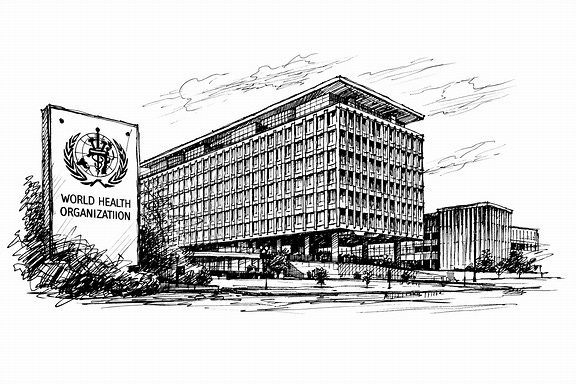
The horror lies not in a single misstep, but in the scale of the consequences. When the WHO misinforms, nations legislate. When it exaggerates risks, smokers are frightened away from safer alternatives. When it suppresses evidence, millions continue using the most lethal form of nicotine delivery ever invented. The gap between the WHO’s rhetoric and its real‑world impact is not merely ironic; it is deadly.
This essay begins by examining the WHO on its own terms — its obligations, its claims, and the growing, unavoidable question of whether its stance on tobacco harm reduction represents not just a scientific failure, but a human‑rights failure.
To understand the depth of this failure, we must begin with the first right the WHO places at risk: the right to accurate information. Article 19 of the Universal Declaration of Human Rights is not an abstract principle; it is the foundation of every informed health decision a person can make. When the WHO distorts evidence on safer nicotine alternatives, it is not merely wrong — it is violating the very right that enables people to protect their own lives. This contradiction between mission and behaviour becomes clearest when we examine the WHO’s actions through the lens of the rights it is obligated to uphold. The first and most fundamental of these is Article 19: the right to seek and receive accurate information. It is here, at the level of truth itself, that the WHO’s stance on tobacco harm reduction begins to unravel. The true horror begins not with policy, but with information — or rather, with the manipulation of it. Article 19 of the Universal Declaration of Human Rights guarantees every person the right to seek and receive accurate, timely, and reliable information. When the WHO issues statements that obscure evidence, exaggerate risks, or suppress scientific consensus, it strikes at the heart of this right. And it is here, with the distortion of truth, that the human‑rights concerns begin.
The distortion of truth
Before demonstrating that the WHO is indeed guilty of distortion, let us look at what the WHO demands we ought to do. According to its own constitution, its public statements, and its repeated declarations on global health governance, the WHO insists that all nations, institutions, and individuals must base their health decisions on accurate, evidence‑based, and transparent information. It warns governments against misinformation, declaring that “misinformation costs lives” in its official guidance on managing an infodemic (who.int in Bing). It condemns the manipulation of scientific findings. It urges the public to trust only verified, reliable sources. And in its own founding document — the WHO Constitution (who.int in Bing) — it frames the dissemination of accurate health information as essential to protecting life and health. In other words, the WHO sets a standard — a high one — and demands that the world meet it. It tells us that misinformation kills, that distorted science endangers populations, and that public‑health communication must be grounded in truth. It positions itself as the global authority on what constitutes reliable evidence, and it expects unquestioning adherence to its guidance. This makes what follows all the more disturbing. Because when we examine the WHO’s own statements on tobacco harm reduction, we find not the clarity it demands from others, but the very behaviours it warns against: selective evidence, exaggerated risks, omissions of crucial context, and claims that do not withstand scrutiny. The organisation that lectures the world about truth has, in this domain, become a source of distortion itself.
And nowhere is this more evident — or more consequential — than in its handling of the fundamental human right protected by Article 19: the right to seek and receive accurate information.
Article 19 of the Universal Declaration of Human Rights guarantees every person the right to seek, receive, and impart information. It is the foundation of informed decision‑making, personal autonomy, and public health. Without accurate information, no individual can meaningfully protect their own wellbeing. The WHO itself repeatedly affirms this principle, warning that “misinformation costs lives” in its official guidance on managing an infodemic (who.int in Bing). It urges governments to provide clear, evidence‑based communication and insists that public trust depends on transparency and accuracy.
Yet when we examine the WHO’s own statements on tobacco harm reduction, we find a pattern of communication that conflicts with the very standard it demands from others. Instead of clarity, we find selective evidence. Instead of accuracy, we find exaggeration. Instead of transparency, we find omission. And instead of empowering individuals with truthful information, we find messaging that obscures the relative risks of different nicotine products — a distortion with profound consequences for public health.
The WHO’s approach to safer nicotine alternatives follows a consistent and troubling pattern. It begins with selective citation, where studies showing harm are highlighted while studies showing reduced risk are ignored. It continues with risk inflation, where hypothetical dangers are presented as established facts. It is reinforced by context removal, where laboratory findings are reported without acknowledging their irrelevance to real‑world use. And it culminates in categorical statements that imply all nicotine products are equally dangerous — a claim that contradicts decades of toxicological and epidemiological evidence.
The WHO’s approach to tobacco harm reduction does not consist of isolated misstatements or occasional lapses in judgement; it follows a consistent, recognisable, and deeply troubling pattern of misinformation that directly undermines the public’s right to accurate health information. This pattern begins with selective citation, where the WHO highlights studies that suggest harm while ignoring the far larger body of evidence demonstrating reduced risk. For example, the organisation repeatedly claims that e‑cigarettes are “harmful to health” and “not proven to be less harmful than cigarettes” (who.int in Bing) (bing.com in Bing), a statement that omits the overwhelming scientific consensus from Public Health England, the Royal College of Physicians, the UK Office for Health Improvement and Disparities, and the Cochrane Collaboration — all of which conclude that vaping is substantially less harmful than smoking. The pattern continues with risk inflation, where hypothetical dangers are presented as established facts. The WHO warns that e‑cigarettes “increase the risk of heart disease and lung disorders” (who.int in Bing) (bing.com in Bing), yet these claims rely on mechanistic laboratory studies and cross‑sectional surveys that cannot establish causation — a limitation the WHO does not disclose. This is followed by context removal, where findings from unrealistic laboratory conditions are reported without acknowledging their irrelevance to real‑world use. The pattern deepens with evidence omission, such as the WHO’s assertion that e‑cigarettes “undermine tobacco control” and “renormalize smoking” (who.int in Bing) (bing.com in Bing), despite population‑level data from the UK, New Zealand, France, and the United States showing that smoking rates fall faster where vaping is accessible and youth smoking continues to decline. The pattern culminates in product conflation, where the WHO blurs the distinction between nicotine and smoking by claiming that nicotine is “highly dangerous” and “damages the developing brain” (who.int in Bing) (bing.com in Bing), without acknowledging that nicotine replacement therapy — approved by the WHO itself — delivers the same substance without the harms of combustion. Through these repeated distortions — selective evidence, exaggerated risks, omitted context, ignored population data, and conflated products — the WHO constructs a narrative that obscures the relative risks of nicotine products and misleads the public about safer alternatives. This is not merely a failure of communication; it is a systematic pattern that denies millions of people the accurate information they need to protect their health, and in doing so, it strikes at the very heart of Article 19.
This pattern is not accidental. It appears across multiple WHO publications, fact sheets, and public statements. And because the WHO is treated as an authoritative source, these distortions cascade into national policies, media narratives, and public beliefs. The result is a global environment in which millions of smokers are denied accurate information about safer alternatives — a direct interference with their Article 19 rights.
This pattern of distortion is not merely an academic concern; it strikes at the core of what Article 19 exists to protect — the right of every person to make informed decisions about their own health. When the WHO misrepresents evidence, exaggerates risks, or withholds crucial context, it deprives individuals of the information they need to choose safer alternatives to smoking. This is not a theoretical harm. Smoking kills more than eight million people every year, a fact the WHO itself emphasises in its tobacco fact sheet (who.int in Bing) (bing.com in Bing). For millions of smokers, the decision to switch to a lower‑risk product is a matter of life and death — and that decision depends entirely on access to accurate information. By obscuring the relative risks of nicotine products, the WHO interferes directly with personal autonomy, denying people the ability to act in their own best interests. It replaces informed choice with fear, evidence with rhetoric, and empowerment with confusion. In doing so, it violates not only the spirit of Article 19 but its practical function: to ensure that individuals have the truthful, reliable information required to protect their own health. A right cannot be exercised if the information needed to exercise it is distorted at the source — and in the domain of tobacco harm reduction, the WHO has become that source.
Article 25 of the Universal Declaration of Human Rights affirms that every person has the right to “a standard of living adequate for health and well‑being”. This includes not only access to medical care, but access to the conditions, technologies, and information necessary to protect one’s health. The WHO itself repeatedly emphasises that smoking is one of the world’s greatest preventable causes of death, responsible for more than eight million deaths every year (who.int in Bing) (bing.com in Bing) (bing.com in Bing). It warns that combustible tobacco is uniquely lethal, that cessation is essential, and that reducing exposure to toxic smoke is a global priority. Yet when safer nicotine alternatives emerge — products that dramatically reduce exposure to the toxins that cause smoking‑related disease — the WHO does not treat them as tools that could advance the right to health. Instead, it frames them as threats, dismisses the evidence of reduced harm, and encourages governments to restrict or ban them.
This stance has profound implications. The right to health is not merely the right to avoid illness; it is the right to access the means of avoiding it. When the WHO discourages or obstructs access to lower‑risk alternatives, it interferes with that right. It does so not by accident, but through a pattern of communication that misrepresents relative risk, exaggerates hypothetical dangers, and ignores real‑world evidence showing that vaping and other non‑combustible products help smokers quit. In countries such as the United Kingdom and New Zealand, where these products are accessible, smoking rates have fallen faster than at any time in recorded history. In countries that follow WHO guidance and restrict them, progress stalls. The WHO does not acknowledge this divergence, nor does it revise its messaging in light of it.
The result is a global environment in which millions of smokers — particularly in low‑ and middle‑income countries — are denied access to safer alternatives that could dramatically reduce their risk of disease. This is not a neutral outcome. It is a foreseeable consequence of the WHO’s own communications. When an organisation with the WHO’s authority misinforms governments, the harm is multiplied: policies harden, access shrinks, and the people most at risk are left with the most dangerous product on the market — the cigarette. In this way, the WHO’s stance on tobacco harm reduction does not merely fail to advance the right to health; it actively undermines it.
At the heart of the right to health lies a principle so fundamental that modern medicine cannot function without it: autonomy, expressed through informed consent. No medical intervention, no treatment decision, no public‑health recommendation is ethically legitimate unless individuals are given truthful, complete, and comprehensible information about their options. The WHO knows this; it teaches it; it demands it from every health system on earth. Yet in the domain of tobacco harm reduction, it denies individuals the very conditions required for informed choice. A smoker cannot consent to continue smoking if they are never told that safer alternatives exist. They cannot weigh risks if the WHO exaggerates some and conceals others. They cannot choose a lower‑risk path if the organisation responsible for global health guidance obscures the difference between smoke and vapour, between combustion and non‑combustion, between deadly and dramatically less harmful. When information is distorted at the source, autonomy becomes impossible. And when autonomy is impossible, informed consent collapses. In this collapse lies the true ethical failure: the WHO, an institution built to protect human dignity, has — in this domain — denied people the dignity of choosing life over death with full knowledge of the facts.
The right of every person to take part in public affairs — directly or through freely chosen representatives — is what Article 21 protects. But this right cannot be exercised in a vacuum. It depends on an informational environment in which citizens, legislators, journalists, and civil‑society groups have access to accurate, balanced, and complete evidence. Without this foundation, participation becomes symbolic rather than substantive. The WHO itself acknowledges this principle in its guidance on managing misinformation, insisting that public trust and democratic engagement require transparency and truth (who.int in Bing). Yet in the field of tobacco harm reduction, the WHO’s communication practices actively erode the very conditions that make democratic participation possible.
When the WHO misrepresents the risks of safer nicotine alternatives, it does not simply mislead individuals — it misleads entire political systems. Legislators rely on WHO briefings when drafting laws. Ministries of health adopt WHO positions as default policy. Journalists treat WHO statements as authoritative fact. And the public, trusting the organisation’s reputation, assumes that its claims are grounded in evidence rather than ideology. In this way, a single distorted message from the WHO can cascade through the entire democratic process, shaping debates, influencing votes, and narrowing the range of policy options available to elected representatives.
The result is a form of democratic displacement: instead of citizens shaping policy through informed engagement, WHO messaging shapes policy by pre‑emptively defining what is “acceptable” for governments to consider. This is especially damaging in low‑ and middle‑income countries, where WHO authority is often treated as unquestionable and where alternative scientific perspectives are less accessible. In these contexts, WHO guidance does not merely influence public affairs — it effectively substitutes for democratic deliberation. Citizens cannot meaningfully participate in decisions about tobacco control if the information they receive is incomplete or misleading. Nor can governments fulfil their democratic mandate if the evidence they rely on has been selectively curated.
In this way, the WHO’s stance on tobacco harm reduction conflicts with Article 21 not through overt political coercion, but through something more subtle and more corrosive: the manipulation of the informational landscape upon which democratic participation depends.
In this way, the WHO’s stance on tobacco harm reduction conflicts with Article 21 not through overt political coercion, but through something more subtle and more corrosive: the manipulation of the informational landscape upon which democratic participation depends. And once democratic participation is weakened, the next casualty is inevitable: the ability of societies to benefit from scientific and technological development. This is the domain of Article 22 — and it is here that the consequences of WHO distortion become even more profound. In this way, the WHO’s stance on tobacco harm reduction conflicts with Article 22 not by accident, but through a systematic suppression of scientific and social development. And if this were the end of the story, it would already represent a profound institutional failure. But the reality is far more troubling. The WHO’s distortions do not remain within the WHO. They are amplified, hardened, and enforced by a body that operates with even less transparency and even greater ideological rigidity: the Framework Convention on Tobacco Control. If the WHO bends evidence, the FCTC breaks it. If the WHO misinforms, the FCTC institutionalises that misinformation. And if the WHO undermines human rights through error, the FCTC does so through design.
The FCTC is not a typical public‑health body. It is a treaty organisation that functions behind closed doors, shielded from public scrutiny, democratic oversight, and scientific challenge. Its meetings are held in secret — a fact documented by The Guardian, which reported that journalists were physically removed from FCTC sessions as delegates voted to exclude the public and press. Academic analyses describe the FCTC as operating with “systematic opacity” and “institutionalised exclusion,” while parliamentary reports in the UK have raised formal concerns about its lack of transparency and democratic accountability. In the name of protecting policy from the tobacco industry, the FCTC has expanded Article 5.3 far beyond its intended scope, using it to exclude not only industry representatives but scientists, clinicians, consumers, and harm‑reduction NGOs — a misuse documented in peer‑reviewed journals such as Tobacco Control and the International Journal of Drug Policy. The result is a system in which dissent is not debated but disqualified, and evidence that challenges the FCTC narrative is treated not as science but as contamination. This is not transparency. It is not science. It is not democracy. It is a parallel structure of authority — a secretive organisation running rampant over the very principles the WHO claims to uphold.
The FCTC’s treatment of safer nicotine products follows a pattern even more rigid and ideologically entrenched than the WHO’s. It begins with pre‑emptive framing, where modern nicotine alternatives are categorised as threats before evidence is even considered — a stance visible in early FCTC technical papers that dismissed e‑cigarettes long before contemporary devices existed. It continues with evidence exclusion, where studies demonstrating reduced harm are rejected not on methodological grounds but on the basis of perceived “industry links,” a practice documented in peer‑reviewed analyses such as the International Journal of Drug Policy’s examination of Article 5.3 interpretations (bing.com in Bing). This exclusion is reinforced by narrative entrenchment: early assumptions, often made in the absence of modern data, are treated as immutable truths. The FCTC’s official statements on e‑cigarettes, for example, continue to rely on outdated or selective evidence, ignoring the extensive independent reviews conducted by bodies such as Public Health England and the UK Office for Health Improvement and Disparities. Academic critiques published in the Harm Reduction Journal describe this approach as “the marginalisation of harm‑reduction science,” noting that the FCTC systematically sidelines evidence that contradicts its predetermined narrative (bing.com in Bing). What emerges is not a scientific assessment but an ideological position: a refusal to acknowledge that non‑combustible nicotine products dramatically reduce exposure to the toxins that cause smoking‑related disease. This pattern is not merely unscientific; it is anti‑scientific, treating evidence as a threat rather than a tool and treating harm‑reduction experts as adversaries rather than contributors.
The FCTC’s secrecy is not incidental — it is structural, deliberate, and repeatedly documented by reputable sources. Entire sessions of the Conference of the Parties (COP) are routinely closed to journalists, observers, and even many member‑state delegates. The Guardian reported that journalists were physically removed from COP meetings as delegates voted to exclude the public and press, describing scenes in which media were “ushered out” before substantive discussions began (bing.com in Bing) (bing.com in Bing). Official FCTC reports confirm this practice, noting that plenary sessions “decided to hold the remainder of the meeting in closed session” — a level of opacity almost unheard of in UN‑affiliated bodies (bing.com in Bing) (bing.com in Bing). Academic analyses published in Global Health Governance describe the FCTC as operating with “systematic opacity” and “institutionalised exclusion,” while the UK Parliament’s All‑Party Parliamentary Group for Vaping has formally criticised the FCTC for its lack of transparency and democratic accountability (bing.com in Bing) (bing.com in Bing). The justification for this secrecy is always the same: the threat of “industry interference.” Yet Article 5.3, originally intended to prevent direct tobacco‑industry influence, has been expanded far beyond its purpose. Peer‑reviewed research in Tobacco Control documents how Article 5.3 is now used to exclude not only industry representatives but scientists, clinicians, consumers, and harm‑reduction NGOs — groups with no industry ties whatsoever (bing.com in Bing) (bing.com in Bing). In practice, the FCTC has created a closed environment in which dissent is not debated but disqualified, and evidence that challenges the FCTC narrative is treated not as science but as contamination. A treaty organisation that excludes the public, excludes the press, excludes scientists, excludes clinicians, excludes consumers, and excludes elected representatives is not protecting public health. It is protecting itself.
The consequences of this secrecy extend far beyond the walls of COP meetings. What begins as distortion within the WHO becomes, through the FCTC, a global system of enforced ignorance. The FCTC converts selective evidence and ideological assumptions into binding treaty obligations, and countries are evaluated on their compliance through official implementation reports published by the FCTC Secretariat (bing.com in Bing) (bing.com in Bing). Funding streams, technical assistance, and international standing are tied to adherence, creating powerful incentives for governments — especially in low‑ and middle‑income countries — to adopt restrictive policies even when those policies contradict independent scientific evidence. Research published in BMJ Global Health documents how WHO/FCTC guidance has driven the global spread of e‑cigarette bans, particularly in LMICs where policymakers rely heavily on WHO authority (bing.com in Bing) (bing.com in Bing). New Zealand’s Ministry of Health has explicitly acknowledged international pressure from WHO/FCTC bodies in shaping its regulatory approach to vaping (bing.com in Bing) (bing.com in Bing). Meanwhile, countries that reject FCTC orthodoxy — such as the UK and New Zealand — have seen smoking rates fall faster than ever recorded, driven in part by the availability of safer nicotine alternatives. This divergence is not acknowledged by the FCTC. It is not debated. It is not even permitted into the room. Through this multiplier effect, the FCTC transforms institutional secrecy into global harm: WHO misinformation becomes FCTC doctrine, which becomes national legislation, which becomes population‑level damage. And the people most affected are those with the least political power and the fewest alternatives — the very populations the WHO and FCTC claim to protect.
Taken together, the evidence reveals not a series of isolated errors, nor a handful of unfortunate misjudgements, but a systemic failure that spans institutions, treaties, and global governance structures. The WHO distorts evidence. The FCTC institutionalises that distortion. National governments, trusting both bodies, convert it into law. And the people most affected — smokers seeking a way out of the world’s deadliest consumer product — are denied access to the very technologies that could save their lives. This is not a coincidence. It is not an accident. It is the predictable outcome of a system in which misinformation is produced at the top, amplified in secret, and enforced without scrutiny. The WHO claims to champion transparency, yet its messaging on safer nicotine products is opaque and selective. The FCTC claims to defend public health, yet it excludes scientists, clinicians, consumers, journalists, and elected representatives from its deliberations. The WHO claims to uphold human rights, yet its guidance undermines the rights protected by Articles 19, 21, 22, and 25. And the FCTC, operating behind locked doors, magnifies these violations into global policy.
What emerges is a structure that behaves less like a guardian of public health and more like an unaccountable authority — one that suppresses evidence, restricts innovation, and obstructs democratic participation. It is a system that treats dissent as contamination, transparency as a threat, and harm‑reduction science as an inconvenience. It is a system that has forgotten the people it was created to protect. And it is a system that, through its secrecy, rigidity, and ideological entrenchment, has allowed preventable deaths to continue on a scale that defies comprehension. This is the reality that must be confronted before any meaningful reform can begin.
At the heart of this analysis lies a simple truth: institutions entrusted with protecting global health have a moral and legal obligation to tell the truth. When they fail in that obligation, the consequences are not abstract. They are measured in lives lost, opportunities denied, and rights violated. The WHO and the FCTC were created to advance human wellbeing, yet in the domain of tobacco harm reduction they have done the opposite. They have distorted evidence, suppressed scientific progress, undermined democratic participation, and obstructed access to life‑saving technologies. They have done so behind closed doors, without transparency, without accountability, and without regard for the rights enshrined in the Universal Declaration of Human Rights.
The world does not need perfection from its health institutions. It needs honesty. It needs openness. It needs a willingness to revise positions when evidence changes. It needs a commitment to human dignity that is stronger than institutional pride. The WHO and the FCTC have shown none of these qualities in their handling of safer nicotine products. Instead, they have allowed ideology to eclipse science, secrecy to eclipse transparency, and control to eclipse compassion.
The cost of this failure is borne by millions of people who smoke not because they want to die, but because they have not been told the truth about safer alternatives. Their right to accurate information has been denied. Their right to participate in public affairs has been undermined. Their right to benefit from scientific progress has been obstructed. Their right to health has been compromised. And their lives — the lives these institutions were created to protect — have been treated as collateral damage.
A reckoning is overdue. The WHO and the FCTC must be held to the same standards they demand of others: transparency, evidence, accountability, and respect for human rights. Until they are, the world will continue to suffer the consequences of a system that has lost sight of its purpose. And the people who pay the price will be those who can least afford it.
Great blog, Robert. I posted it for you on X, and the WHO and others wonder why the public doesn’t trust them. They live in a world of ideology and selective narratives. But what they do is give the public more reason not to trust them. Without honesty, scientific reviews, and comparing risks between non-combustible products (vapes, oral nicotine pouches, and other safer alternatives) and deadly cigarettes. They tell the public that their health and their right to truthful, informed choice are dismissible. They leave those who smoke trapped in a cycle of lifelong smoking. And that stance is deadly. :(